Table of Contents
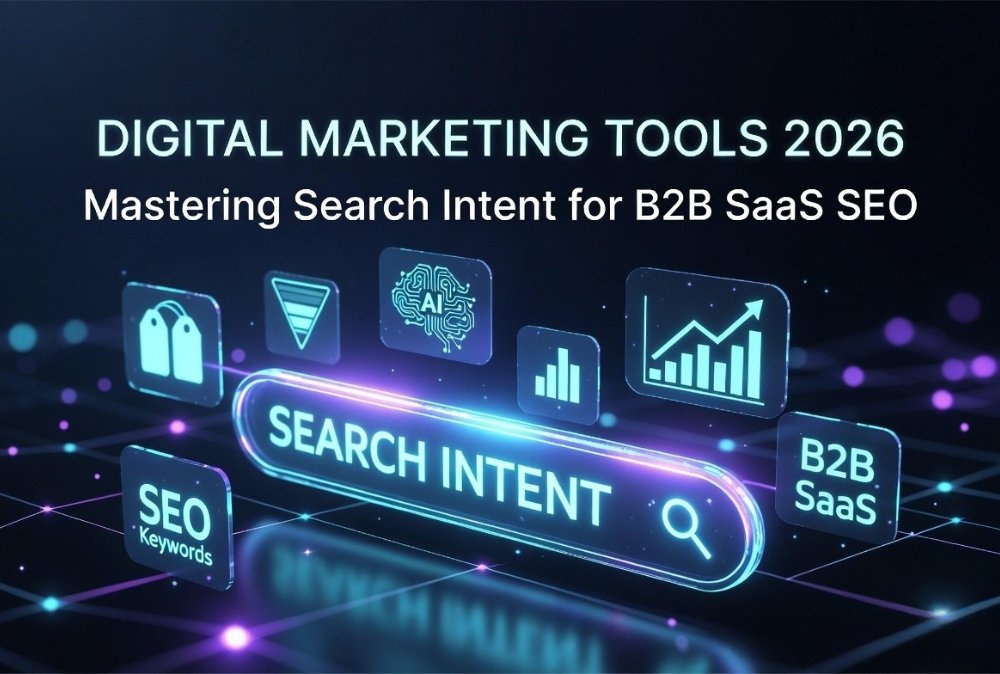
Hey, if you’re running a B2B SaaS company right now, you already know how brutal the competition feels. You pour time into content, tweak your site, run ads… and still watch qualified leads slip away. I’ve been there. The game has changed big time by 2026. Digital marketing isn’t about throwing more blog posts at Google anymore. It’s about truly understanding search intent on B2B SaaS SEO and pairing it with the right marketing tools so your content actually reaches people who are ready to buy.
I wrote this because I’ve watched too many smart SaaS teams waste months creating “awesome” content that ranks for nothing. In this piece, we’re going to unpack what’s really working in digital marketing today, the marketing tools that actually move the needle, and exactly how to nail search intent on B2B SaaS SEO. No fluff, just stuff you can use tomorrow.
1. Why 2026 Feels Different: Buyers Have Changed (And So Has Search)
Let me be straight with you. Two years ago, you could rank with a decent keyword-stuffed article. Not anymore. In 2026, people don’t just “search”; they ask AI assistants real questions, compare solutions in one breath, and expect answers that feel like they were written for them personally.
That’s where search intent on B2B SaaS SEO comes in. It’s not some fancy SEO term anymore; it’s the difference between traffic that bounces in 8 seconds and traffic that books demos. Buyers are in different stages: some are just realizing they have a problem, others are comparing your tool to three competitors, and a few are literally typing “book demo [your category]” into Google.
When your digital marketing strategy ignores that intent, you’re basically invisible to the people who matter most. But when you get it right? Your organic traffic starts converting like paid ads, except it costs you almost nothing after the initial work.
2. The Harsh Truth About Doing Digital Marketing Without the Right Tools
Look, I get it. You’re probably thinking, “I can do this manually.” I tried that too. Spoiler: it sucks.
Marketing tools in 2026 aren’t luxury items anymore; they’re survival gear. The good ones don’t just spit out keyword lists. They show you exactly what questions your ideal customers are typing at 2 a.m. when they can’t sleep because their current workflow is broken.
These tools let you:
- Spot intent patterns across thousands of real searches
- See which topics actually turn into pipeline (not just traffic)
- Automatically suggest content angles that match what buyers want
Without them, you’re guessing. With them, you’re operating like a 10-person marketing team even if you’re a solo founder or a three-person crew. The best part? Most of these marketing tools now have AI baked in that actually understands B2B buyer psychology, not just generic blog advice.
3. Breaking Down Search Intent — The Part Most SaaS Teams Still Get Wrong
Here’s the thing nobody says out loud: most B2B SaaS SEO fails because teams chase volume instead of intent.
There are basically four types of searches that matter for SaaS:
- “What is [problem]?” → They’re just learning
- “Best [category] for [specific use case]” → They’re shopping
- “[Tool A] vs [Tool B]” → They’re comparing
- “Pricing/demo/alternatives to [your competitor]” → They’re ready to talk
Search intent on B2B SaaS SEO means building content that perfectly matches whichever stage the searcher is in. When you do that, Google rewards you because users stay longer, click around more, and actually convert.
I’ve seen SaaS companies double their demo requests just by rewriting their top 10 pages to speak directly to the real “why” behind the search. It’s not magic — it’s matching your words to their thoughts.
4. A Simple Framework to Optimize for Search Intent (That Actually Works)
You don’t need a PhD in SEO to do this right. Here’s the exact process I use with clients:
- Dig into real buyer questions using marketing tools that show intent data, not just search volume.
- Build content clusters around one big problem your SaaS solves, covering every stage of the buyer journey.
- Write like a human who actually uses your product. Answer the unspoken follow-up questions before they even ask.
- Add comparison tables, checklists, and real examples he stuff that makes people think “this was written for me.”
- Track what matters, not just rankings, but how many of those visitors actually reach your pricing page or book a call.
Do this consistently, and you’ll watch your digital marketing ROI climb faster than you expected.
5. The Marketing Tools That Are Actually Worth Your Money in 2026
I’m not here to push a million tools at you. But after testing a bunch, these categories make the biggest difference when it comes to search intent on B2B SaaS SEO:
- Tools that reveal hidden buyer questions and trending intent patterns
- AI content helpers that analyze what’s already ranking and tell you how to beat it
- Dashboards that connect your SEO traffic straight to your CRM pipeline
- Competitor spies that show exactly how others are satisfying (or failing) search intent
The real winners stack two or three of these together and let them feed each other. Suddenly, your digital marketing feels less like throwing darts and more like a well-oiled machine.
6. Your 2026 Action Plan: Stop Guessing, Start Ranking
Here’s the no-BS plan:
Start by auditing your top 15 pages. Ask yourself honestly: “Does this actually answer what someone was searching for, or did we just stuff keywords?” Then pick 3-5 marketing tools that fix your weakest spots.
Next 90 days:
- Map your buyer journey and every search they make along the way
- Create or rewrite content strictly around search intent on B2B SaaS SEO
- Measure demo requests and pipeline influence, not just traffic numbers
- Adjust monthly based on what’s actually working
Companies that treat search intent as the core of their digital marketing don’t just rank higher; they build trust, shorten sales cycles, and create a steady stream of organic leads that actually close.
What’s one thing you’re going to change this week after reading this? Maybe it’s auditing one old blog post, or finally trying a new intent tool. Drop it in the comments. I read every single one and love geeking out over this stuff with fellow marketers.
