
Table of Contents
Sales targeting has become the heartbeat of successful B2B growth, especially as buyers increasingly handle their own early research with AI tools and make decisions in bigger committees. What used to work is broad outreach, generic pitches, and hoping for responses-no longer cuts it in this fast-moving environment. Instead, top teams rely on sharp account intelligence to identify accounts with genuine buying momentum, understand the people driving those choices, and deliver outreach that feels timely and truly relevant.
The current buyers are more mature. They explore heavily in alternatives with AI agents, screen vendors in the background, and only contact them when they are prepared or even not at all when self-service lines are sufficient. This fact compels the salespeople to abandon the volume strategy and focus on precision plays. The reward is evident: data-driven targeting teams have shorter sales cycles, win more, and bigger deals as they are targeting prospects at the point of maximum interest instead of interruptions between cold and hot.
Building Strong Foundations with Account Profiling and Persona Mapping
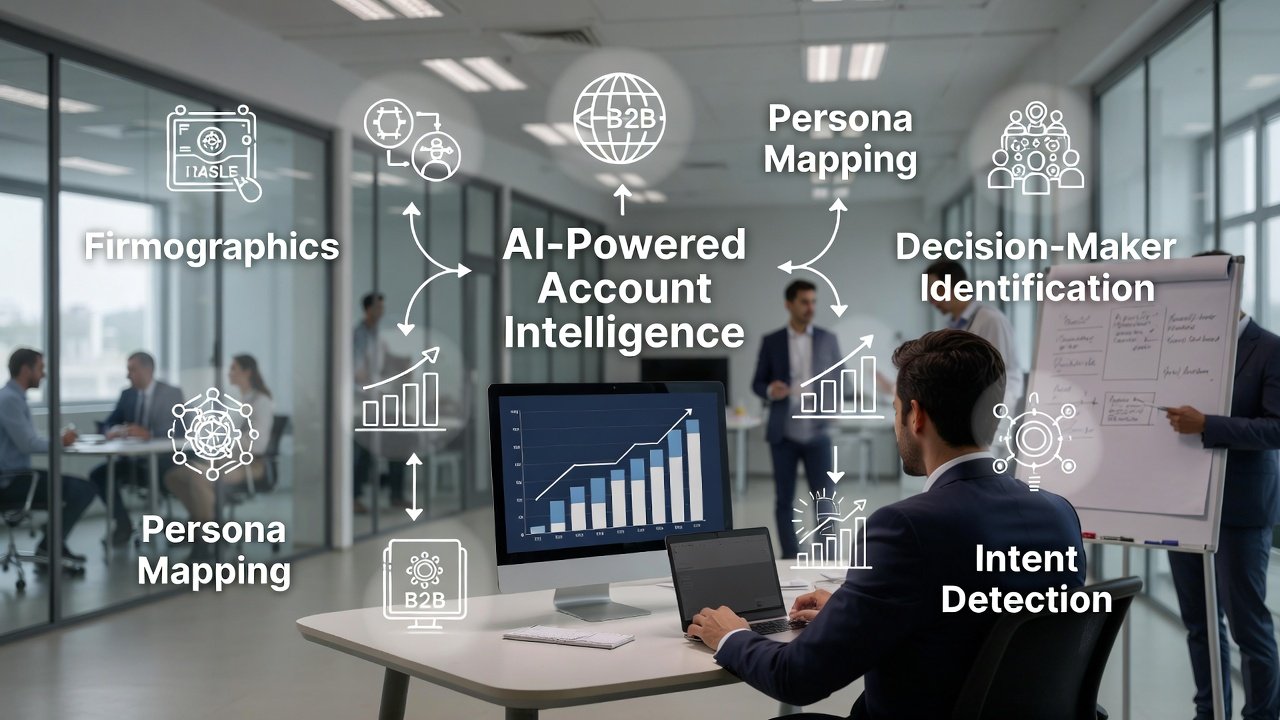
The real power in sales targeting begins with thorough account profiling, which creates a rich, evolving snapshot of each potential customer. You start by gathering core firmographics things like industry, company size, revenue, and location-then add layers such as the technologies they use, recent growth indicators like funding or key hires, and even broader signals from earnings mentions or market shifts. In 2026, predictive AI takes this further by scoring accounts on conversion likelihood, factoring in fresh events that signal urgency, such as leadership changes or competitive pressures. This turns static lists into living priorities, helping teams focus energy where it’s most likely to pay off instead of spreading efforts thinly across unqualified names.
Persona mapping then introduces the human aspect into the picture. B2B purchases nearly always include multiple voices-echnical evaluators interested in integration, champions interested in pushing on efficiency, and economic buyers obsessed with ROI, and blockers who require assurance. Mapping these personas implies digging into actual customer discussions, win/lose cases, and CRM trends to get beyond the titles, but to comprehend the motivations and pain points, channels that each role likes to go through, and the weight each role gives to decisions. When you message these details, touching upon the risk issues of a CFO and at the same time convincing an engineer that using the product is easy, you develop confidence within the group. Things get agreed upon easily, the dissenting voices are quelled sooner, and agreements become carried on like a moving train instead of rotting in committee limbo.
Layering Intelligence for Precision with Segmentation, Intent Detection, and Decision-Maker Focus
Segmentation of the audience helps relate profiling and personas into realistic groups to make the targeting specific and huge. The examples here are likely to group accounts by stage of growth, high-velocity startups and more mature businesses, maximize spending or by behavioural pattern, such as accounts exhibiting a spike of research in your category. Needs-based splits also come in handy, as they would divide teams seeking cost reductions and those in search of innovation. Making segments only a few will make it actionable; teams will be able to design specific campaigns, use budgets in a sensible way, and gauge outcomes without making it overly complex. The trick lies in making these divisions led by account intelligence to ensure that each of the segments feels prioritized on real potential.
One of the greatest advances in modern sales targeting is intent detection. Going beyond the antique metrics of page views or downloads, current methods focus on real-time, predictive metrics, the creation of jobs indicating a new demand, mentions in the press of pertinent issues, or trends that a buying window is open. Contacts have become contact-level, displaying precisely which people are online. Their exploration is what remains in context, as outreach is almost prescient. By taking the initiative, cold outreach turns into warm and pertinent discussions, frequently outreach accounts before competitors and reducing the distance between recognition and directness.
Sharp-identification of decision-makers binds it. In complicated sales, the absence of a significant influencer can ruin the whole process. The tools can be used to map buying committees with the help of org charts, LinkedIn signals, and intent data, and uncover not only evident contacts but also new ones, such as recent hires with influence. By involving several threads in the initial stages, approaching champions, approvers, and evaluators at the same time disperses risk and expedites alignment. AI helps in making the process strategic and not scattered, as it proposes the best timing and sequences according to the observed behaviours.
When these items combine, the template of 2026 success becomes simple but strong. Start by creating your ideal customer profile and personas-Intellectualize layers to score and rank accounts in real-time. Customize outreach at scale using programmable modular stories that adjust to buyer stage and position. Make sure that sales and marketing have the same perception of intent signals and metrics to work in harmony. Measure relevant outputs, increased interaction, quicker pipeline flow, stronger win rates on high-priority accounts and repeat with scenario planning to be nimble in the face of economic or buyer changes.
The human touch, despite all the AI and data in action, is what makes the difference between winners and losers. In the world of automated messages and self-service journeys, buyers still react to a real insight, a thoughtful message mentioning their recent struggle, a personalized demo of your particular pain, or a prompt call demonstrating that you have done your homework. A combination of accuracy in intelligence and genuine connection makes the experiences unique and generates loyalty.
Achieving the sales targeting right using powerful account intelligence is not about working harder, but being smarter in a buyer-led world. Profiling, mapping, segmentation, intent awareness, and fine-tuning stakeholder outreach facilitate the creation of predictable pipelines, enabling teams to grow deal values and close their deals faster. The fact that those who are adopting these strategies are not merely following, but are setting the pace of B2B success as 2026 comes.
