
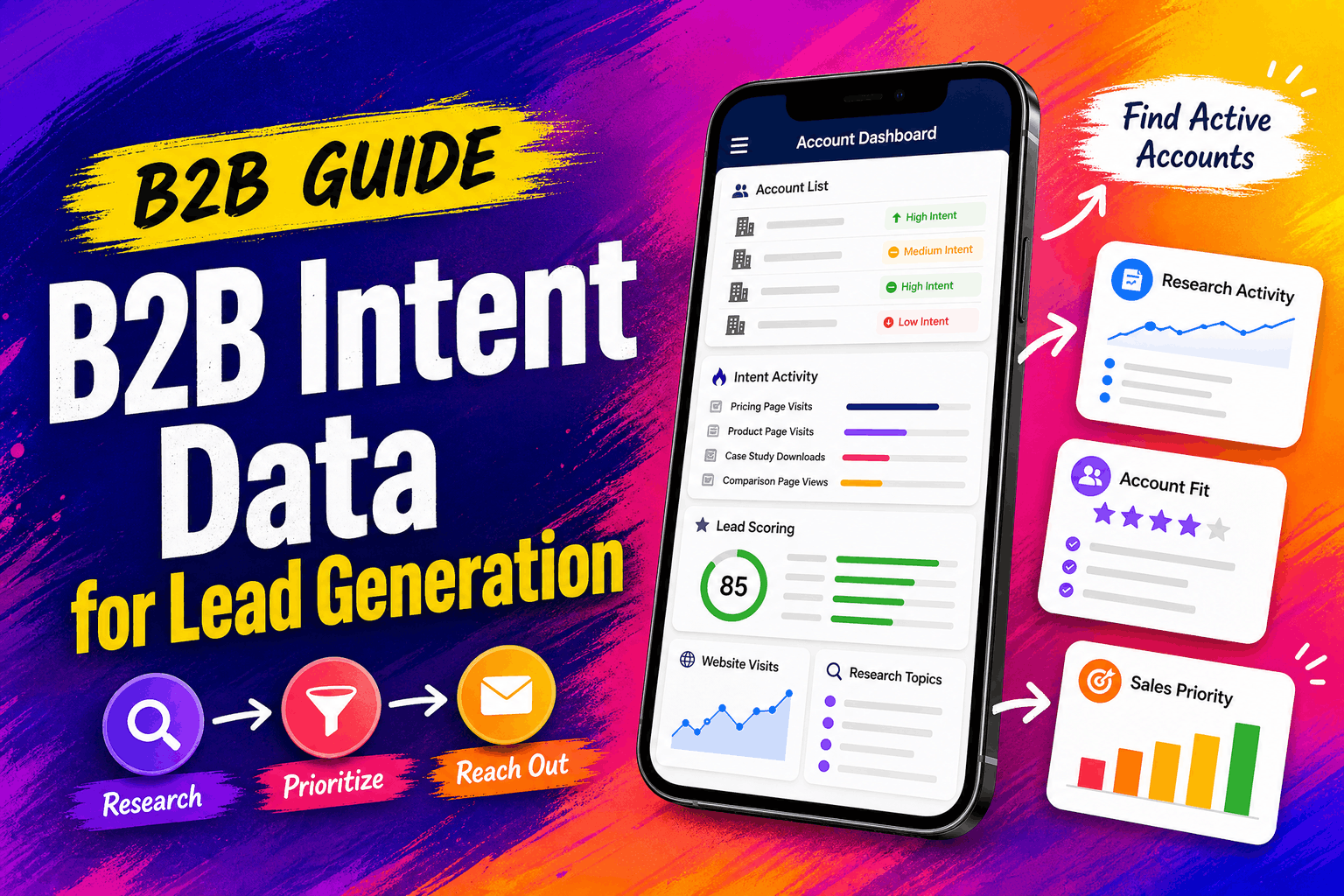
A sales team can have hundreds of target accounts in its database and still struggle to decide who deserves attention first. how to use b2b intent data for lead generation becomes easier when marketers stop treating every account equally. Research activity, website visits, content downloads, and repeated engagement can help reveal which companies may be exploring a problem your business solves.
That does not mean every active account is ready to buy. It means your team has more context before sending an email, making a call, or planning a campaign.
What Is B2B Intent Data?
B2B intent data is information about the research activity of companies and buying groups. It can show that an account is reading about a business problem, comparing solutions, visiting relevant pages, or interacting with content connected to your product category.
For example, imagine a technology provider selling data security software. One target account visits an article about data protection once. Another account reads several security guides, checks a pricing page, downloads a comparison document, and returns to the website a few days later.
The second account may deserve closer attention.
That does not prove a purchase is coming. It simply suggests that the company is spending more time on a subject related to the problem you solve.
How Intent Data Works
how intent data works depends on where the information comes from and how it is matched to an account. Common signals include:
- Visits to product or pricing pages
- Downloads of guides and reports
- Attendance at webinars
- Repeated visits from the same company
- Email clicks and replies
- Searches around a product category
- Competitor comparison activity
- Several people from one account viewing related content
- Hiring activity linked to a new business initiative
A single action is rarely enough to make a sales decision. A pattern is more useful. Frequency, recency, topic relevance, and account fit should be considered together.
How to Use B2B Intent Data for Lead Generation
The strongest results come when intent data becomes part of an existing sales and marketing process. It should help your team decide what to do next, not sit in a dashboard that nobody checks.
1. Define Your Ideal Customer Profile
Before reviewing intent signals, describe the companies you actually want to reach. This forms the base of a practical B2B lead generation strategy.
Your profile may include:
- Industry
- Employee count
- Revenue range
- Technology stack
- Business model
- Buying roles
- Sales cycle
- Common operational problems
- Existing systems or vendors
- Regions served
- Typical contract value
A broad description such as “businesses that need better software” will not help much. A clearer profile might focus on software companies with established sales teams, several hundred employees, and a need to replace an outdated customer data system.
Intent activity becomes more useful when it comes from an account that already fits your offer.
2. Pick Relevant B2B Intent Signals
Not all B2B intent signals carry the same meaning.
A general article view may show light interest. A visit to a pricing page may suggest evaluation. Several people from the same company reading comparison content could indicate a wider buying conversation.
Useful signals include:
- Increased visits around one topic
- Research into competitors
- Repeated product-page activity
- Engagement from more than one department
- Downloads of technical or pricing material
- Return visits within a short period
- New hiring connected to the problem you solve
Create a short list of topics that matter to your sales process. If you offer account intelligence services, relevant subjects may include sales targeting, buyer research, data quality, and account-based marketing.
The list should stay focused. Tracking every possible subject creates noise and makes the sales team less likely to trust the results.
3. Separate First-Party and Third-Party Data
First-party intent data comes from channels your company controls. This includes website visits, form submissions, email activity, webinar attendance, product usage, and content downloads.
Third-party intent data comes from research activity outside your own website. It may show that an account is reading industry content, comparing vendors, or researching a topic across other digital properties.
| Data type | Typical source | Useful for |
| First-party intent data | Your website, emails, webinars, and CRM | Follow-up and lead scoring |
| Third-party intent data | External research and content activity | Finding active accounts earlier |
First-party data is usually easier to connect to a known contact because it comes from your own systems. Third-party information can help you spot accounts before they complete a form or speak with sales.
Neither source tells the full story. Combining both with company data, contact roles, and engagement history gives your team a clearer view.
How Sales Teams Can Use Intent Data
Intent data for sales is most useful when it helps reps decide which account to investigate first and what conversation may be relevant.
Consider two companies that match the same ideal customer profile. Company A has shown no recent activity. Company B has read three articles about replacing its current system, visited a product page, and downloaded a buyer guide.
Company B may deserve earlier review.
The sales rep should still check the account’s size, current technology, business changes, and likely decision-makers. The intent signal creates a reason to look closer. It does not replace qualification.
A useful priority model can combine:
Account fit + Research activity + Engagement
An account with strong fit but no activity may belong in a nurture programme. An account with strong fit and rising activity may deserve sales review. An account with several engaged contacts and repeated research may need faster follow-up.
4. Match Outreach to the Research Topic
Generic outreach wastes the context that intent data provides.
If an account is reading about implementation costs, the message might address planning, internal resources, and expected timelines. If the account is comparing vendors, the message could share a useful checklist or explain how to assess providers.
The first message does not need to announce that the company has been monitored. That can feel intrusive. A better approach is to offer something connected to the topic without making claims about private behaviour.
For example:
Many revenue teams struggle to keep account data accurate while sales territories change. We put together a short checklist for reviewing account fit before outreach.
That message is specific without sounding like a tracking report.
5. Route Priority Accounts to the Right Owner
A strong signal loses value when it reaches the wrong person.
Assign accounts based on:
- Industry knowledge
- Account ownership
- Company size
- Sales territory
- Product line
- Existing relationships
- Time zone
- Buyer role
A technical account may need a specialist who understands implementation questions. A professional services company may respond better to someone familiar with long sales cycles and several stakeholders.
The goal is simple: the person receiving the account should know why it matters and what to investigate.
6. Track What Happens After Outreach
Do not measure intent programmes only by traffic or content downloads. Review what happens after the sales team acts.
Useful measures include:
- Reply rate
- Positive response rate
- Meetings booked
- Sales-qualified leads
- Opportunities created
- Pipeline value
- Time from signal to first contact
- Conversion by topic
- Revenue connected to the account
Keep the measurement period long enough to match the sales cycle. A complex B2B purchase may not produce an opportunity within a few days.
Common Problems With B2B Buyer Intent Data
B2B buyer intent data can support better decisions, but poor use creates false confidence.
Treating Every Signal as Purchase Intent
A person may read an article for research, education, or a work assignment. Activity suggests interest; it does not confirm a buying decision.
Ignoring Account Fit
A company can show heavy activity and still fall outside your target market. If the account is too small, serves the wrong industry, or lacks the required technology, sales outreach may not make sense.
Using Old Signals
Interest changes quickly. A signal from several months ago may have little value today. Give greater weight to recent, repeated activity.
Sending the Same Message to Everyone
Intent data should change the conversation. If every account receives the same email, the extra information has not been used well.
Collecting More Data Than Sales Can Use
Reps do not need a long report filled with unrelated facts. They need a short explanation of account fit, active topic, recent behaviour, and a sensible next step.
How to Choose Intent Data Providers
When comparing intent data providers, look beyond the size of their database. Ask how the information is collected, how quickly signals are updated, and how accounts are matched.
Review:
- Data sources
- Topic coverage
- Signal freshness
- Account matching
- Contact accuracy
- CRM integration
- Reporting options
- Privacy controls
- Support quality
- Pricing structure
Test a small group of real accounts before signing a long contract. Check whether the accounts match your ideal customer profile and whether the topics are relevant to your sales process.
A provider may show thousands of signals, but that does not make the data useful. The better question is whether a sales rep can understand the information and act on it without guessing.
A Practical Intent Data Workflow
A workable process can follow nine steps:
- Define the ideal customer profile.
- Build a list of target accounts.
- Select a small group of relevant topics.
- Monitor recent account activity.
- Compare research behaviour with account fit.
- Create priority groups.
- Route accounts to the correct sales owner.
- Personalise outreach around the research topic.
- Record replies, meetings, opportunities, and pipeline results.
Intent data works best when marketing, sales, and account intelligence teams use the same information. It gives them a clearer reason to prioritise one account over another, while human qualification still decides whether a real sales opportunity exists.
