Table of Contents
|| Due to confidentiality agreements, client details have been anonymized.
If you are in the SaaS business, getting traffic isn’t the most difficult part. The key is to bring in buyers with the intent of buying, who are genuinely interested in your product and willing to work with sales.
Despite the time and money many SaaS businesses invest in their campaigns, including paid ads, SEO, webinars, and outbound outreach, they often find that their leads are low-quality and fail to convert. This is where Content Syndication Services have emerged as one of the top growth strategies for modern B2B brands.
This case study delves into the adventure of a US-based SaaS organization that leveraged a content syndication marketing campaign, a goal-marketplace purpose, strategic content distribution, and advanced lead nurturing to transform its lead generation approach.
The advertising campaign observed not only a lift in lead volume but also a significant increase in quality, engagement, and sales conversion.
About the Company
The client was a growing US-based SaaS organization delivering workflow automation and productivity solutions for enterprise teams.
Their product had strong market demand, and their internal marketing team had already developed valuable content assets, including:
- Whitepapers
- Industry reports
- Product guides
- Webinar content
- Educational blogs
- Customer success stories
The company was having a problem, though, consistently creating good content – it wasn’t reaching the right people.
Organic growth had tapered off, paid acquisition expenses were rising, and the sales team were having problems with unqualified leads.
The company required a scalable approach focused on creating qualified pipeline opportunities, not just website traffic.
When they went to IntentFlow Media for a very targeted Demand Generation Services campaign with a content syndication focus.
The Biggest Lead Generation Challenges
Before launching the advertising and marketing campaign, numerous performance gaps have been diagnosed.
The SaaS company is experiencing:
- Low MQL-to-SQL conversion costs
- Rising charge in keeping with the lead
- Poor webinar attendance
- Weak engagement from corporate consumers
- Low reaction costs from outbound campaigns
- Inconsistent pipeline boom
While their content material creation efforts were robust, the distribution process lacked precision.
Their advertising campaigns reached extensive audiences; however, they did not always lure decision-makers.
The sales crew regularly received contacts who:
- Had no buy cause
- We have been outside the target enterprise
- Had limited buying authority
- We had no longer been actively attempting to find solutions
This created inefficiencies across each advertising, marketing, and income operation.
Why Traditional Marketing Wasn’t Working
Like many SaaS brands, the company initially relied heavily on:
- LinkedIn advertising
- Google Ads
- Generic email outreach
- Organic SEO traffic
- Basic retargeting campaigns
Although these channels generated impressions and clicks, they did not consistently deliver qualified buying opportunities.
The company realized that simply driving more traffic was not enough.
They needed a smarter approach that focused on:
- Audience intent
- Buyer behavior
- Industry relevance
- Content personalization
- Enterprise targeting
This shift in strategy became the foundation of their new B2B Lead Generation framework.
The Strategy Behind the Campaign
Instead of chasing excessive lead volume on my own, the marketing campaign focused on attracting highly relevant prospects who are already inquisitive about workflow automation and operational performance solutions.
The entire strategy was built around three core pillars:
- Precision targeting
- Content-driven engagement
- Lead qualification
Audience Segmentation and Buyer Targeting
One of the first steps was defining the ideal customer profile.
The target audience included:
- IT Directors
- Operations Managers
- Digital Transformation Leaders
- CTOs
- Enterprise Technology Buyers
The campaign also segmented prospects based on:
- Company size
- Industry
- Geographic region
- Technology adoption stage
- Purchase intent signals
This allowed the campaign to focus especially on organization-stage possibilities most probable to convert.
Unlike broad advertising and marketing campaigns, this strategy prioritized relevance over attainability.
Leveraging Existing Content Assets
One of the smartest decisions during the campaign was to use the company’s existing content library rather than creating everything from scratch.
The team identified high-performing assets, including:
- Automation trend reports
- Workflow optimization guides
- SaaS implementation checklists
- Webinar recordings
- Productivity research papers
These assets became the foundation of the company’s Content Marketing for SaaS strategy.
Instead of letting valuable content sit unnoticed on the website, the campaign distributed it across highly targeted B2B channels.
Multi-Channel Content Distribution
To maximize visibility, the campaign leveraged a multi-channel syndication model.
Content was distributed through:
- Industry-specific publisher networks
- B2B email databases
- SaaS-focused communities
- Sponsored content placements
- Webinar promotion channels
- Intent-driven audience platforms
This approach ensured the content reached buyers who were already consuming information on workflow automation and SaaS productivity solutions.
The goal was not just impressions but engagement from relevant decision-makers.
The Role of Intent Data
A major reason the campaign succeeded was the use of Intent-Based Marketing.
Rather than targeting cold audiences randomly, the campaign focused on users actively researching topics related to:
- Workflow management
- SaaS automation
- Enterprise productivity
- Process optimization
- Digital operations
Intent alerts helped become aware of corporations already displaying shopping behaviour online.
This dramatically advanced lead excellence because the marketing campaign reached people already inquisitive about similar answers.
As a result, engagement costs improved substantially compared to previous campaigns.
Landing Page Optimization
Driving traffic alone was not enough.
The campaign also focused heavily on conversion optimization.
Dedicated landing pages were created specifically for syndication traffic.
These landing pages included:
- Simplified lead forms
- Clear call-to-action sections
- Mobile optimization
- Trust-building copy
- Faster loading speeds
- Personalized messaging
Reducing friction during form submissions helped improve conversion rates without sacrificing lead quality.
Lead Verification and Qualification
One of the most common problems in SaaS Lead Generation is poor-quality contact data.
To address this issue, every lead generated through the campaign underwent a strict verification process.
The process included:
- Email validation
- Company verification
- Job title filtering
- Duplicate removal
- Geographic validation
Only verified and relevant leads were passed to the sales team.
This significantly improved sales productivity and reduced wasted outreach efforts.
Lead Nurturing Strategy
The lead technology stage is really the primary one in the customer’s experience.
Historically, many organization purchasers want training to make a purchase.
The advertising marketing campaign emphasized the importance of engagement with the aid of incorporating a primarily based Lead Nurturing Strategy with the following:
- Follow-up email sequences
- Educational content offers
- Webinar invitations
- Industry insights
- Product-focused case studies
This helped keep prospects engaged throughout the sales funnel.
Over time, nurturing improved both trust and conversion potential.
Campaign Results
The campaign was making a difference in the first few months.
The SaaS business has seen significant improvements across several performance indicators.
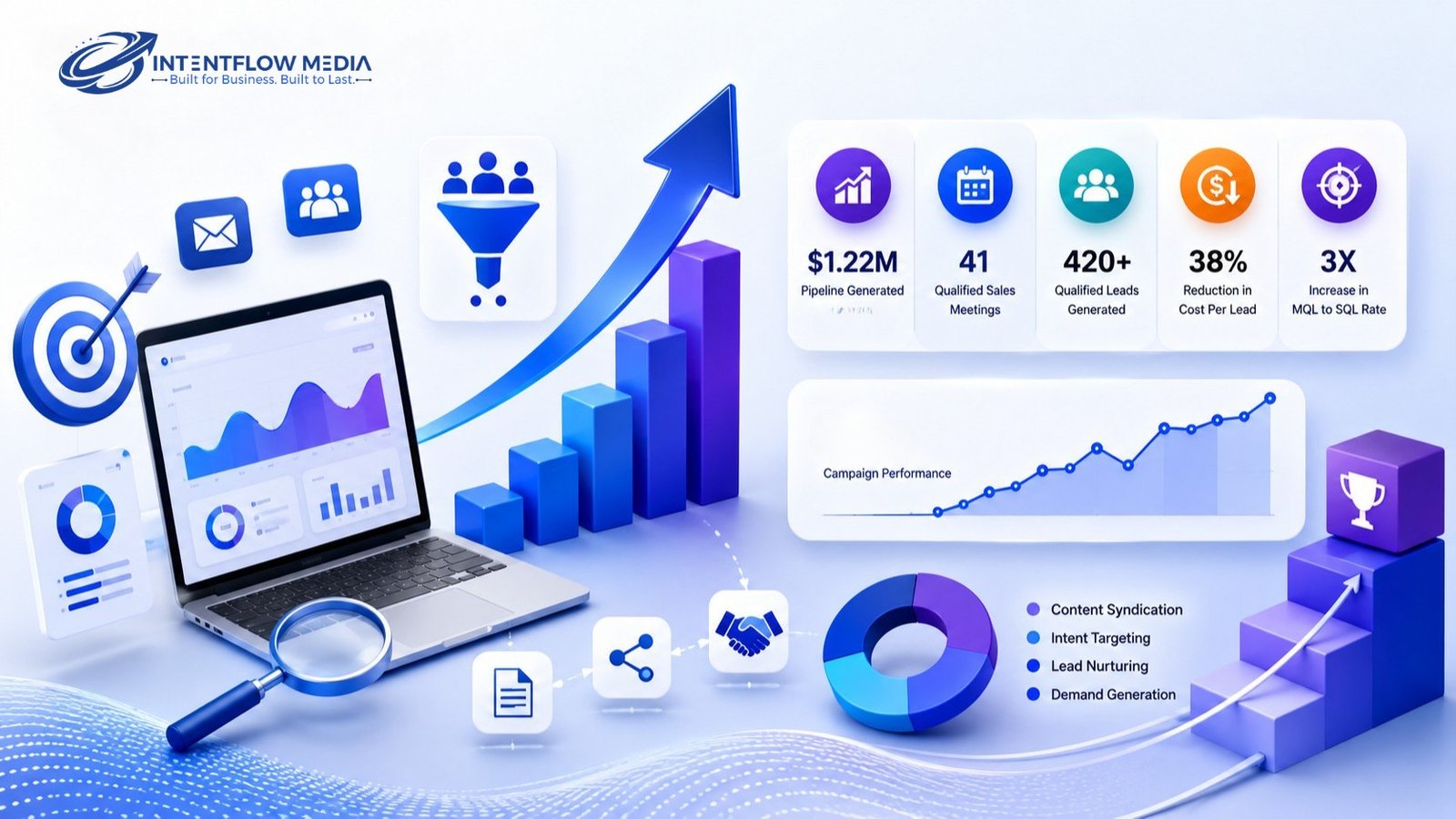
Performance Metric | Before Campaign | After Campaign |
Monthly Qualified Leads | 85 | 420+ |
Webinar Registrations | 120 | 410 |
Email Engagement Rate | 11% | 27% |
MQL-to-SQL Conversion | 9% | 24% |
Cost Per Lead | High | Reduced by 38% |
These results highlighted the effectiveness of combining Content Syndication Services with intelligent audience targeting and lead nurturing.
Why the Campaign Performed So Well
Several factors contributed to the campaign’s success.
Highly Relevant Audience Targeting
The campaign avoided broad targeting and instead focused only on high-value buyers.
This improved lead quality significantly.
Strong Content Positioning
The content addressed real business pain points instead of generic promotional messaging.
This increased trust and engagement.
Better Lead Verification
Filtering low-quality contacts before sales outreach improved efficiency across the pipeline.
Multi-Touch Engagement
The campaign used multiple engagement points rather than relying on a single interaction.
This strengthened prospect relationships over time.
Key Lessons from the Campaign
This campaign revealed several important insights about modern Demand Generation Services.
Distribution Matters More Than Content Volume
Creating more content does not automatically produce better results.
Strategic distribution is what drives visibility and engagement.
Intent Signals Improve Conversions
Buyers actively researching solutions are far more likely to engage and convert.
Intent-based targeting improves overall campaign efficiency.
Nurturing Is Essential for Enterprise Sales
Most B2B buyers require multiple touchpoints before making a decision.
Consistent nurturing increases conversion opportunities.
Data Quality Directly Impacts ROI
Poor-quality leads waste marketing budget and sales resources.
Verification and qualification processes are critical for long-term success.
The Growing Importance of Content Syndication in SaaS
As competition increases, SaaS companies can no longer rely solely on paid advertising or organic traffic.
Modern growth strategies increasingly depend on:
- Targeted distribution
- Audience intelligence
- Multi-channel engagement
- Personalized nurturing
- Account-based targeting
This is why Account-Based Marketing and content syndication are becoming essential components of scalable SaaS growth.
Companies that effectively distribute their expertise build stronger brand authority and generate more qualified opportunities.
Final Case Study -Content Syndication
This case illustrates that strategic Content Syndication Services, coupled with target-market and audience targeting and structured nurturing, can revolutionize SaaS lead generation.
The marketing campaign emphasized reaching out to decision-makers who had been interested in workflow automation solutions, no longer clicks or impressions.
The result was:
- Higher-quality leads
- Better engagement
- Lower acquisition costs
- Improved sales alignment
- Stronger pipeline growth
For SaaS companies struggling with inconsistent lead quality or rising acquisition costs, content syndication offers a scalable and sustainable path to long-term growth.
When executed strategically, it becomes far more than a marketing tactic; it becomes a powerful revenue engine for modern B2B businesses.
