
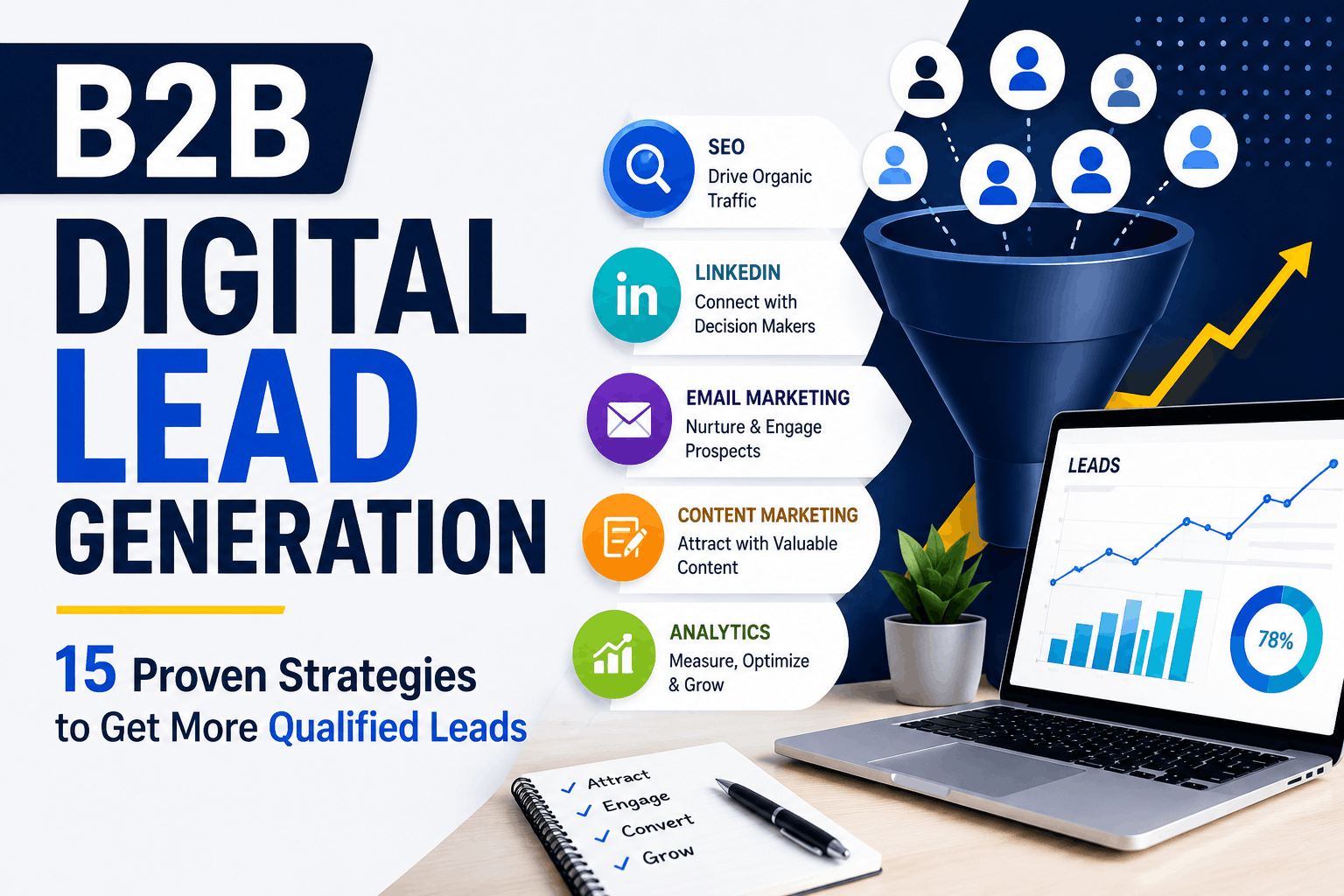
Finding new business clients isn’t as simple as sending a few cold emails or running ads. Buyers spend time researching, comparing options, and talking with their teams before they ever book a meeting. That’s why b2b digital lead generation has become a core part of modern sales. Companies that consistently attract qualified prospects online spend less time chasing cold contacts and more time closing deals.
What Is B2B Digital Lead Generation?
B2B digital lead generation is the process of attracting businesses through online channels and turning interested visitors into potential customers. Instead of relying only on trade shows or referrals, companies use websites, search engines, email campaigns, LinkedIn, webinars, and downloadable resources to connect with decision-makers.
A successful process doesn’t stop after collecting an email address. The goal is to generate qualified B2B leads who are genuinely interested in your product or service and are ready for a sales conversation.
Why Businesses Invest in B2B Lead Generation
A full sales pipeline rarely happens by chance. Sales teams need a steady flow of prospects, especially in competitive industries like SaaS, manufacturing, finance, and IT services.
Strong B2B lead generation helps companies:
- Reach buyers before competitors do.
- Build trust through helpful content.
- Reduce the cost of finding new customers.
- Give sales teams better-qualified opportunities.
- Create predictable monthly growth.
When marketing and sales work together, every campaign has a clearer purpose.
Build a Website That Converts Visitors
Many businesses focus on getting traffic but overlook what happens after someone lands on their website.
A high-performing website should answer common questions quickly, explain your services clearly, and make the next step obvious. Visitors shouldn’t have to search for your contact form or pricing information.
Simple improvements often make a noticeable difference:
- Clear headlines
- Fast loading pages
- Mobile-friendly design
- Visible call-to-action buttons
- Trust signals like testimonials and client logos
These changes support both digital lead generation and user experience.
Publish Content That Solves Real Problems
People rarely search for a company name first.
They search for answers.
Someone looking for better prospecting may search “how to generate sales leads” or “best outbound strategy for SaaS.” Helpful articles that answer these questions can attract visitors long before they’re ready to buy.
Useful content includes:
- Industry guides
- Step-by-step tutorials
- Comparison articles
- Case studies
- Original research
- Templates and checklists
Content also supports your overall lead generation strategy because each article becomes another entry point into your website.
Use SEO to Bring Consistent Traffic
Paid campaigns stop producing leads the moment you pause your budget.
SEO works differently.
Optimized pages continue to attract visitors month after month because they better answer search intent than competing pages.
Focus on topics your audience is already searching for, including:
- B2B lead generation services
- lead generation company
- How to generate B2B leads
- lead generation for SaaS
Create a detailed page for each topic rather than combining unrelated subjects into a single article.
Internal links also matter. Connect blog posts with your service pages so readers can continue exploring your website naturally.
LinkedIn Remains One of the Best Prospecting Channels
Decision-makers spend time on LinkedIn every day.
That makes it one of the strongest platforms for B2B online lead generation.
Rather than sending hundreds of identical connection requests, start conversations based on shared interests or recent company updates.
For example, commenting on a prospect’s post before reaching out creates familiarity. That small step often receives a better response than a cold sales pitch.
Consistency matters more than volume.
Create Valuable Lead Magnets
People protect their inboxes.
They’re much more willing to exchange an email address when they receive something genuinely useful.
Popular lead magnets include:
- Industry reports
- Pricing calculators
- ROI templates
- Sales playbooks
- Email templates
- Market research
A practical resource attracts stronger prospects than a generic newsletter subscription.
Improve Email Outreach
Cold email still works.
A poorly written cold email doesn’t.
Generic introductions disappear into crowded inboxes because they sound identical.
Instead, mention something specific about the company. Reference a recent announcement, hiring trend, funding round, or product launch. Personal details show you’ve done your homework.
Keep emails short.
Ask one clear question.
Make replying easy.
That approach produces better conversations and supports long-term B2B sales leads without overwhelming prospects.
Combine Organic and Paid Campaigns
SEO builds momentum over time.
Paid advertising delivers faster visibility.
Businesses often see stronger results by using both together.
Organic content captures long-term traffic, while paid campaigns test offers, audiences, and landing pages quickly. Insights from paid campaigns can also inform future content decisions.
This balanced approach strengthens your overall digital lead generation efforts.
Measure More Than Lead Volume
A campaign producing 500 leads sounds impressive until only five become customers.
Track quality, not just quantity.
Useful metrics include:
- Conversion rate
- Cost per qualified lead
- Sales meetings booked
- Pipeline value
- Customer acquisition cost
- Revenue generated
These numbers reveal whether your lead generation strategy is actually producing business growth.
Align Marketing and Sales Teams
Marketing celebrates downloads.
Sales celebrates signed contracts.
When both departments chase different goals, opportunities disappear.
Regular meetings help define what counts as a qualified prospect. Shared reporting also prevents leads from sitting untouched for days.
Companies with aligned teams usually respond faster and convert more opportunities into customers.
Use Marketing Automation Carefully
Automation saves time, but too much automation makes communication feel cold.
Use automation for:
- Welcome emails
- Lead scoring
- Follow-up reminders
- CRM updates
- Appointment confirmations
Leave relationship-building to real conversations.
People still prefer talking with people.
Refresh Existing Content
Publishing new articles is only part of the job.
Older pages often contain outdated statistics, broken links, or missing information.
Updating existing content with current examples, better visuals, and stronger internal links can improve rankings without creating a new article.
Many businesses overlook this simple opportunity.
Build Trust Before Asking for a Meeting
Business buyers rarely make quick decisions.
They’re evaluating risk.
Testimonials, client success stories, detailed service pages, and transparent information all reduce uncertainty.
If someone reaches your website through B2B digital lead generation, every page should answer the same question:
“Can this company solve my problem?”
The easier that answer becomes, the easier it is for prospects to take the next step.
Turn Visitors Into Sales Opportunities
Traffic alone doesn’t grow revenue.
Visitors become valuable when they trust your expertise enough to contact your team, request a demo, or download a useful resource.
A clear website, a consistent publishing schedule, thoughtful outreach, and a practical lead-generation strategy work together over time. Businesses that focus on helping buyers first usually generate better conversations, stronger relationships, and more predictable sales opportunities than those chasing quick wins.
